Thursday, 7 February 2013

A Day Out At Kala Ghoda Arts Festival


9 years old Samith is having a good time.


KalaGhodaArtsFestival is held in Mumbai every year in the month of February.
There are various workshops and events happening at the festival.


At a stall run by the Snow Leopard Conservation centre, we bought a keychain and some postcards. In one of the postcards, I recognized the picture of a bird, (it was a variety of a Magpie Robin), and the aunty at the stall was so happy that she gave me the postcard for free! There was also an artist at the venue, who sketched my portrait. That day, I had gone to the dentist to extract a tooth, and so, I could have ice creams! In all, I had 5 scoops of ice cream that day!!! After I came home, I calculated how much money we had spent. It was a total of almost 2000 rupees!

He is sure is lucky to go everyday and have so much fun.


If you are in Mumbai and you have a holiday, do go have some fun with your family and friends.


Monday, 19 November 2012

Sunita Williams-Woman Space Astronaut of Indian Origin.

image source: Google

Many of you must have heard of Sunita Williams. I had discussed about Sunita Williams in my previous post when she had returned after six months in space.

Sunita Williams is an Indian American astronaut and a United States Navy officer who holds the record for longest space flight by a woman.

Well she is in news again. She, along with Japanese astronaut Akihiko Hoshide, Russian cosmonaut Yuri Malenchenko, parachuted in Soyuz TMA-0sM capsule through dark, cloudy skies and touched down at 7:56am local time and landed on the snow covered steppe 52miles northeast of the town of Arkalyk in northern Kazakhstan.

The crew had spent 125 days abroad the International Space Station, a $100 billion research complex involving 15 countries and orbiting 250 miles above earth.

So what did Sunita and her crews do at the outer space for four months?

The crew conducted a number of experiments, including tests on radiation levels at the space station and research into the effects of melting glaciers and seasonal changes on Earth’s ecosystem. They also managed several visits to the space station by international and commercial spacecraft and conducted several space walks to maintain the station.

Sunita Williams visited India in September 2007 and went to her ancestral village Jhulasan in Gujarat. She was awarded the Sardar Vallabhbhai Patel Vishwa Pratiba Award by the World Gujarati Society, the first person of India descent who was not an Indian citizen to be presented the award.

On October 2007, Sunita Williams spoke at American Embassy School and then met the Prime minister of India, Manmohan Singh.

She has expressed her desire to adopt a girl from Ahmedabad.

Monday, 14 May 2012

Pocket Pets


Many children like to keep pets, they are great companions. It is fun taking care of them, bathing them, feeding them and taking them out for a walk. They are stress busters. Some like dogs and some cats,  there are many who like to keep birds but the cutest of them all are the pocket pets.

Pocket pets are small rodents which can be carried in a pouch and kept in a cage, most of them are playful at night.


You must have seen big rats in your building compound? Well these rats breed on garbage and solid waste. It’s not healthy to have them in the house because they can spread disease, eat electrical wires, and cause lot of damage in the house. These are wild rats.

But there is another breed of rats that can be tamed and domesticated. The significant difference is mainly in their coloring, while the wild rats are normally brown; the domesticated rats have different colors ranging from white to blue. They also have a longer lifespan because they are protected from predators and can be given a healthy diet of fruits and seeds, kept clean and given medical care when required. Rats fluff up their hair, hiss and squeal and move their tail around when defending their territory.

Fancy Rat 


Fancy rats come in a wide variety of colors and coat types and there exists several rat fancy groups worldwide. While some pet rats retain the agouti coloring of the wild brown rat (three tones on the same hair), others may be black based colors. Additionally, eye-color is considered a subset of coloring, and coat-color definitions often include standards for the eyes as many genes which control eye color will also affect the coat color. Color names can vary for more vague varieties, like lilac and fawn, while the interpretations of standards can fluctuate between (and even within) different countries or clubs


Sugar Glider


The sugar glider has asquirrel-like body with a long prehensile tail.  Males are larger than the females, and their length from the nose to the tip of the tail is about 24 to 30 cm (12–13 inches, the body itself is approx. 5–6 inches). A sugar glider has a thick, soft fur coat that is usually blue-grey; some have been known to be yellow, tan, or albino.  A black stripe is seen from its nose to midway of its back. Its belly, throat, and chest is of a cream color.
Gerbils

Gerbils are typically between sixand twelve inches (150 to 300 mm) long, including the tail which makes up approximately one half of their total length. One species, the Great Gerbil, originally native to Turkmenistan, can grow to more than 16 inches (400 mm). The average adult gerbil weighs approximately 2½ ounces.
Kangaroo Rats

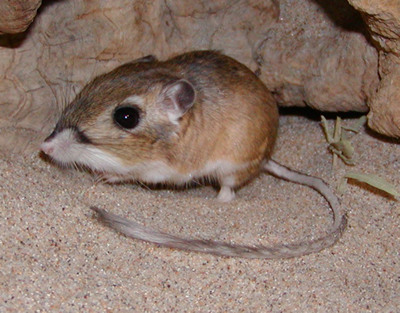
Kangaroo rats are six-toed endotherms with large hind legs, small front legs and relatively large heads. Adults typically weigh between 70-170 g. The tails of kangaroo rats are longer than both their bodies and their heads. Another notable feature of kangaroo rats are their fur lined cheek pouches which are used for storing food. The coloration of kangaroo rats varies from cinnamon buff to dark gray, depending on the species.
Hamster
Hamsters are typicallystout-bodied, with tails shorter than body length, and have small, furry ears, short, stocky legs, and wide feet. They have thick, silky fur, which can be long or short, colored black, grey, honey, white, brown, yellow, red, or a mix, depending on the species.

Chinchilla
Chinchilla has a shortertail, a thicker neck and shoulders, and shorter ears.  Body length about 10-14 inches; tail is another 5-6 inches or so
Degu

The degu is a small rodent with a body length of 25.0 to 31.0 centimetres and a weight of 170 to 300 grams. It has yellow-brown fur above and creamy-yellow below, with yellow around the eyes and a paler band around the neck. It has a long, thin tail with a tufted black tip, dark sparsely-furred ears, and pale grey toes. Its fifth toe is small with a nail, rather than a claw, on the forefeet. Its hind feet are bristled. Its cheek teeth are shaped like figures-of-eight.


Sunday, 15 April 2012

The Eagle Story


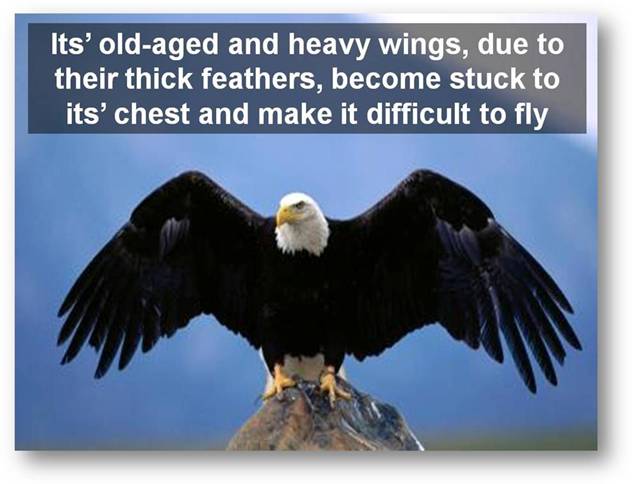
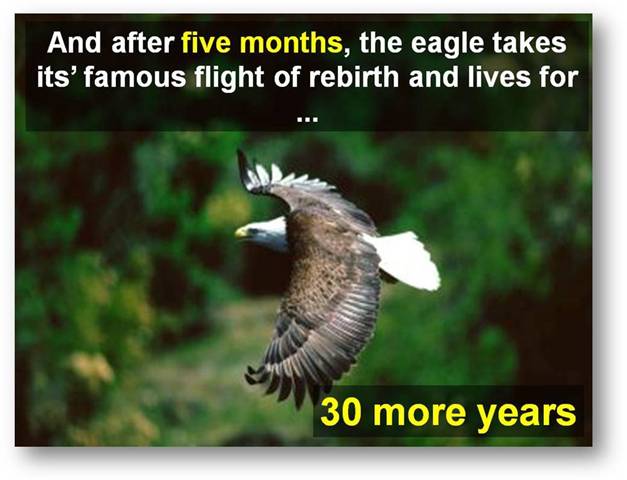
When it rains, most birds head for shelter; The eagle is the only bird that, in order to avoid the rain, starts flying above the cloud


Monday, 5 December 2011

Chug! chug! chug......Train Ride Through Dream Town


Koooooooo! 
 Koooooooo! 
 Chug! Chug! Chug! 
Chug a train 
Chug a train
 Noisy little chug a train 
Winding through the hills and trees 
Chug a train, take me please 
Oh! Please take me

 What fun it is to sing this song, holding the arm of your friends, forming a chain and moving like a train, up and down the obstacles in the path.

 Do you like to go travel by train, car or plane?

 Well, my all time favorite is to travel by train.

 I like to see the train chugging through the vast fields, I love to see the waterfall rolling down the hill during rainy season and most of all all I like the train stopping at lonely stations in the middle of the night and what I love the most is drinking tea in those clay cups and eating at all odd hours.

 Have you tried that?

 Have you travelled to Matheran by that little toy train that winds slowly through the hills, so slow that you can actually walk alongside by it?


This extremely lightweight (1.5 tonnes) railcar was used on the Neral-Matheran line on the Central Railways. Power to the wheels is transmitted by a chain, and the wheel arrangement is rather peculiar. (can you see that in the picture?) With a wooden body and a fuel tank capacity of 10 gallons, the car could seat 12 passengers. Like all other cars-on-rails, this one is provided with a hand brake as well.


I am specially fascinated by this car-train

  This 1925 model Austin, originally an automobile was made for running on road. It was later sold to scrap dealer. A railway employee brought this car from scrap dealer and restored it. However, he made few major changes to the car. He fitted rail wheels to the car and removed the steering. Thus began its journey as railcar. It was used for carrying inspection officials on track. It could carry six people. It is the only one of its kind in world still in running condition.


This crane tank you are likely to see at the railway workshops serving the dual purpose. As steam locomotives, they could be used as work shunter, moving vehicles within, and in and out or workshops. In their spare time, they could be used as cranes within the workshops, for lifting vehicles off their undercarriages etc.

Such machines were popularly known as 'crane tanks'. The engine is fitted with three cylinders: two to power the locomotive, and one for the crane.


"Sir Leslie Wilson" of the GIPR was one of the first electric locos to work in India. It was built in 1928 and was retired in 1974 as 'EF' class No.1-20027 The EF/1 class were later renamed class WCG1 and were all retired from service a few years ago.

The locomotives better known as 'Crocodiles' were built at the Metroplitan Vickers works and their mechanical portions came from the SLM, Winterthur.


This unique steam monorail was built in 1907. This unusual train is based on the "Ewing System", and connected Bassi with Sirhind (6 miles). This was designed by Col. Bowles. The unique train system consists of a track of single rail. See that? This mono track, the load-carrying wheel are run while one big iron wheel at other side to balance it and to keep the train upright. This train as built by Orenstein & Koppel of Berlin. This train ran till October 1927.


Fairy Queen'...the oldest preserved steam locomotive in the country is currently out on the mainline running the special tourist trains to Alwar and back!! The EIR loco was built by Kitson Thomson & Hewitson of Leeds, UK in the year 1855 and is still in operation today!! This loco weighs 26 tons and has a 2-2-2 wheel arrangement.


Many people consider ‘WP’ no 7200 as the best looking steam locomotive built anywhere in the world, which was built in the year 1947 and spent its entire working life on the Central Railways! Built by Baldwin this loco retired in May 1987. It weighed 103 tons and had a 4-6-2 wheel arrangement.


'Decauville' was a WG Bagnall built steam locomotive and worked on the Decauville Railway in the North West Frontier. Built in 1902 this loco weighed 15 tons and had a 2-4-2 ST wheel arrangement


One of the more recent additions to the National Railway Museum is the 'WL' class of locomotive. Built by the Vulcan Foundry in 1955, this loco worked on SR before being sent to the NR and still bears its Ferozpur shed markings on it!


An engine of 1950, Vulcan Foundry built 'HPS' class No.24467 that stands with a GIPR saloon on the grounds of the National Railway Museum. The loco first worked on the EIR and retired on the NR. Weighing 75 tons it had a 4-6-0 wheel arrangement.


Loco featured is an Ajmer Workshops built, 'F' class No.734 of the Rajputana Malwa Railway (RMR). This metre gauge loco was built in 1895 and was one of the first locos ever to be built in India. It had a 0-6-0 wheel arrangement and weighed 38 tons.


There are some engines which are fireless steam locomotive, that is similar to a conventional steam locomotive, but has a reservoir, known as a steam accumulator, instead of a boiler. This reservoir is partly filled with water and charged with steam from a stationary boiler. The locomotive can then work on the stored steam until the pressure has dropped to a minimum level, after which it must be recharged.European fireless steam locomotives usually have the cylinders at the back, while American ones often have the cylinders at the front, as in a conventional locomotive.


Over the years a great variety of engine have been made and if you are in Delhi you might want to visit the National Railway Museum which is spread over 10 acres of land. The museum has a wide and varied collection of rare and antique steam locomotives, carriages, saloons and other railway artifacts. It has both live exhibits as well as working/non-working models in its indoor gallery.

 The museum also runs a toy train around its grounds on regular days. On some days the Old Patiala State Steam Monorail is steamed up and runs on its track around the museum.

 Okay lets sing the song again......

  Koooooooo! Koooooooo! 
 Chug! Chug! Chug! 
Chug a train 
Chug a train 
Noisy little chug a train 
Winding through the hills and trees 
Chug a train, take me please 
Oh! Please take me


 Toy train at Baroda source

Monday, 25 July 2011

The Elephant and the Doggy


The elephant and doggy were walking sadly, both lost, confused and in tears

Said the elephant to the doggy, “My eye-sight is poor; one sharp twig has poked me, for few days my friend, I may not be able to see well, will you lead me across to the seas?”

“Agreed” said doggy, and held on to the elephant’s trunk and together, they walked with glee, the doggy hopped and jumped and ran very fast then came back to hold on to elephant’s knee.

They walked for long, the elephant and doggy till they reached a green banana tree

“I am hungry” said the doggy “look up there, dear elephant; will you pluck one banana for me?”

“Yes of course, if you be my friend, I fetch it all for free" Then smiled at doggy and stretched his trunk to reach up high onto the tree.

He plucked out bananas one by one, and counted “one, two, three”

The doggy jumped and happily grabbed and repeated, “one, two three.”

“One, two, three, one, two, three” they chanted loudly as doggy ran round and round, all around the tree.

“Thank-you my friend, I love this song, but pray, tell me what is this ‘one, two three’? asked doggy of his friend elephant as he huffed and puffed, then happily leaned against the tree.

“One is when I plucked first one, two is for the second one, add one more and count together, it becomes number three, you see?”

“One, two, three, one, two, three” they chanted loudly as doggy held on to elephant's trunk and together they ran around the tree.

“One, two, three, one two three,” jumping, hopping sang the elephant and doggy. Singing, chanting, dancing, walking, together they finally reached by the sea

The doggy barked and yelped and groaned, then rolled down to play on the sand. The elephant was amused; he sat down too and rolled down just like his friend. Tired from too much walking, playing, they stretched out to hold each other’s hand. Doggy and elephant both sat down to rest, and discovered that they had become the best of friends

Written for children’s literature ‘Short Story Slam Week 6

My Published Books for Kids

Image and video hosting by TinyPic